Why a Galápagos Luxury Cruise Offers the Best Way to Explore Darwin's Living Laboratory
For decades, visiting the Galápagos Islands meant choosing between a spartan liveaboard with shared cabins and a cramped schedule, or a large cruise ship that could never get close to the real action. But a new kind of travel has emerged: the galápagos luxury cruise. It combines the intimacy of a small vessel with the comfort and service that let you focus entirely on the wildlife, the landscapes, and the quiet thrill of being somewhere truly wild.
The difference is not just about soft sheets and good wine. It is about time. A well-designed small yacht can navigate channels that bigger ships cannot reach, tie up at remote landing docks, and launch pangas (the sturdy inflatable boats used for landings) within minutes of spotting a pod of dolphins. When you are on a vessel that carries only a dozen or so passengers, every decision can be adapted to what the animals are doing right then, not to a fixed itinerary written months in advance.
The Yacht Makes the Difference
The natural paradise yacht, a 16-passenger vessel designed specifically for these waters, exemplifies the philosophy behind a galápagos luxury cruise. With a small group, the guides can tailor each day to the conditions: if a rare sighting is reported on the far side of an island, the captain can alter course without disrupting anyone else's plans. The ratio of crew to guests means that snorkelling gear is always ready, the glass-bottom kayaks can be deployed on a moment's notice, and the panga boats are launched alongside the yacht so you never waste time waiting for a turn.
This agility matters because the Galápagos National Park restricts visitor numbers at every site. A small luxury yacht can secure permits for multiple landing zones on the same day, which a larger ship cannot. You might start the morning on Bartolomé Island watching the sun rise over its volcanic crater, then cross to the northern shore of Santa Cruz Island for an afternoon swim with sea lions, all while the crew prepares a ceviche lunch back on board. The logistics are invisible to you, which is exactly how they should be.
What You Actually See and Do
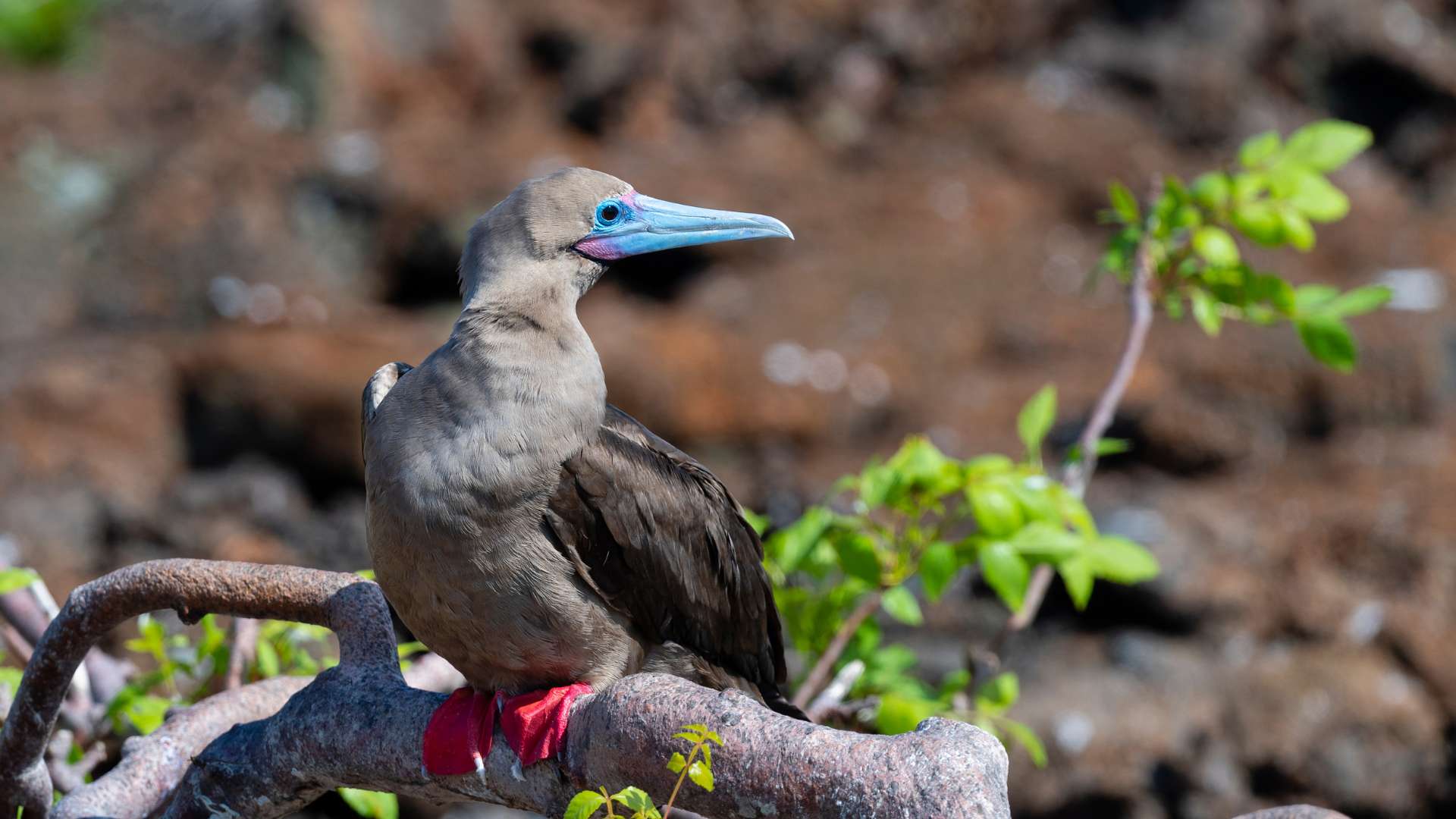
The islands themselves are the real draw. On Genovesa Island, known as Bird Island, the cliffs are lined with nesting red-footed boobies, frigatebirds, and swallow-tailed gulls. You can walk among them, keeping a respectful distance, and feel like you have stepped into a nature documentary. The blue-footed boobies perform their courtship dance right beside the trail, completely unbothered by your presence because they have no natural predators on land.
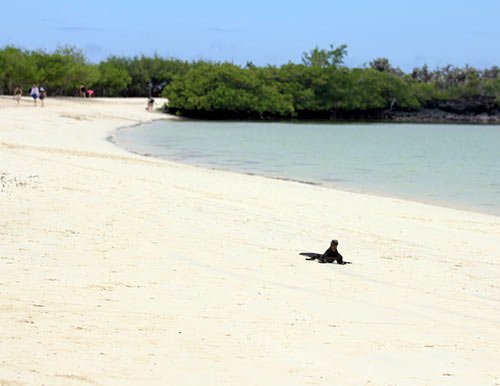
Isabela Island offers a different experience: the volcanic landscape is young and raw, with lava tunnels you can walk through and a lagoon where flamingos feed in the shallows. The marine iguanas here are darker and larger than those on other islands, and they cluster on the black rocks like living statues. A good guide will point out the subtle differences between species from island to island, something you would miss if you were rushing through a checklist of sights.
Underwater, the richness is just as impressive. With the yacht's snorkelling gear always accessible, you can drop in for a quick session whenever the current is right. The water is cool, so a wetsuit is recommended, but the reward is swimming alongside sea turtles, white-tip reef sharks, and schools of surgeonfish. On calm days, the glass-bottom kayaks let you peer into the shallows without getting wet, perfect for wildlife photography when you want to keep the camera dry.
Santa Cruz Island and the Heart of the Archipelago
Santa Cruz Island is where most journeys begin, and it is also home to the Charles Darwin Research Station, where conservation efforts for the giant tortoises are coordinated. Seeing the tortoises up close, some of them over a century old, gives you a tangible sense of the evolutionary story that Charles Darwin first pieced together here. The station works closely with the Galápagos Conservancy to protect the fragile ecosystems, and your visit supports that work through the park fees included in every cruise permit.
Puerto Ayora, the main town on Santa Cruz, is a pleasant place to stretch your legs, with a small harbour full of fishing boats and a path lined with saltbush and prickly pear cactus. But the real value of a luxury cruise is that you can spend the night anchored away from the town, under a sky so full of stars that the Milky Way casts a shadow. No light pollution, no noise, just the sound of the Pacific Ocean washing against the hull.
Why It Works for Wildlife Photography
If you are serious about wildlife photography, the small-group format is a game-changer. On a galápagos luxury cruise, the number of people on a given trail is limited by park regulations, so you are never jostling for position. The guides know the habits of the animals and can position the pangas for the best light. They also understand that photographers need time: ten minutes watching a single marine iguana can yield a better shot than rushing to see five different species.

The marine iguanas are a perfect subject. They are slow-moving, indifferent to humans, and come in subtle shades of black, grey, and rust. On the lava rocks they blend in almost completely, but a low-angle shot against the sky reveals their prehistoric profile. The blue-footed boobies, with their bright feet and comical expressions, are easier to frame but demand patience: they will not dance on cue. The best images come from waiting, and a luxury itinerary gives you that time.
For birders, the Darwin's finches are a constant source of fascination. Their beaks vary from island to island, a living lesson in adaptation. On Genovesa, the vampire finch (a subspecies of sharp-beaked ground finch) pecks at the blood of booby chicks, behaviour that Darwin never recorded. Seeing it in person connects you to the ongoing process of evolution.
Conservation and Responsible Travel
The Galápagos Islands are a UNESCO World Heritage site, and every visitor has a responsibility to leave no trace. The park regulations are strict: you must stay on marked trails, keep a minimum distance from all animals, and pack out everything you bring in. A good luxury cruise operator enforces these rules with quiet professionalism. The guides carry first-aid kits and emergency communication devices, but they also carry the authority to turn back anyone who steps off the path.
The Galápagos Conservancy funds projects that protect the islands' unique species, from the giant tortoises to the Galápagos penguin (the only penguin species that lives north of the equator). Your visit, through the park fees and the taxes included in the cruise price, contributes directly to that work. It is a rare case where tourism and conservation align cleanly, as long as you choose an operator that follows the rules.
The Practical Side of a Luxury Cruise
What does a day on a galápagos luxury cruise actually feel like? You wake early, around six, to the sound of the anchor chain and the smell of coffee. After a light breakfast, you board the panga for a wet landing on a beach where sea lions are already basking. The guided walk lasts two or three hours, moving at a pace that lets you stop and look. Back on the yacht, there is time for a proper breakfast, maybe a shower, and then the yacht moves to a new anchorage while you relax on deck. The afternoon might be a snorkelling session, a kayak paddle around a cliff face, or a second landing on a different part of the same island.
The evenings are quiet. Dinner is served family-style, and the conversation usually turns to what you saw that day. The guides answer questions, point out details you missed, and prepare you for the next day's itinerary. There is no entertainment, no casino, no shopping mall. The entertainment is the islands themselves, and that is exactly the point.
For anyone who wants to experience the Galápagos without the compromises of a budget tour or the crowds of a big ship, a luxury cruise on a vessel like the natural paradise yacht is the best option. It is expensive, yes, but the value comes in the quality of the experience, not the quantity of amenities. You trade a few extra square feet of cabin space for the freedom to chase a pod of dolphins, to stay an extra hour at a seabird colony, to drift in a glass-bottom kayak over a coral head while the sun sinks into the Pacific. That is the kind of travel that stays with you.